


Architecting High-Concurrency Multi-Tenant SaaS with Next.js 15 and PostgreSQL RLS
How to achieve complete multi-tenant tenant data isolation, sub-30ms P95 latency, and zero data leakage using Row-Level Security in Next.js 15 enterprise platforms.
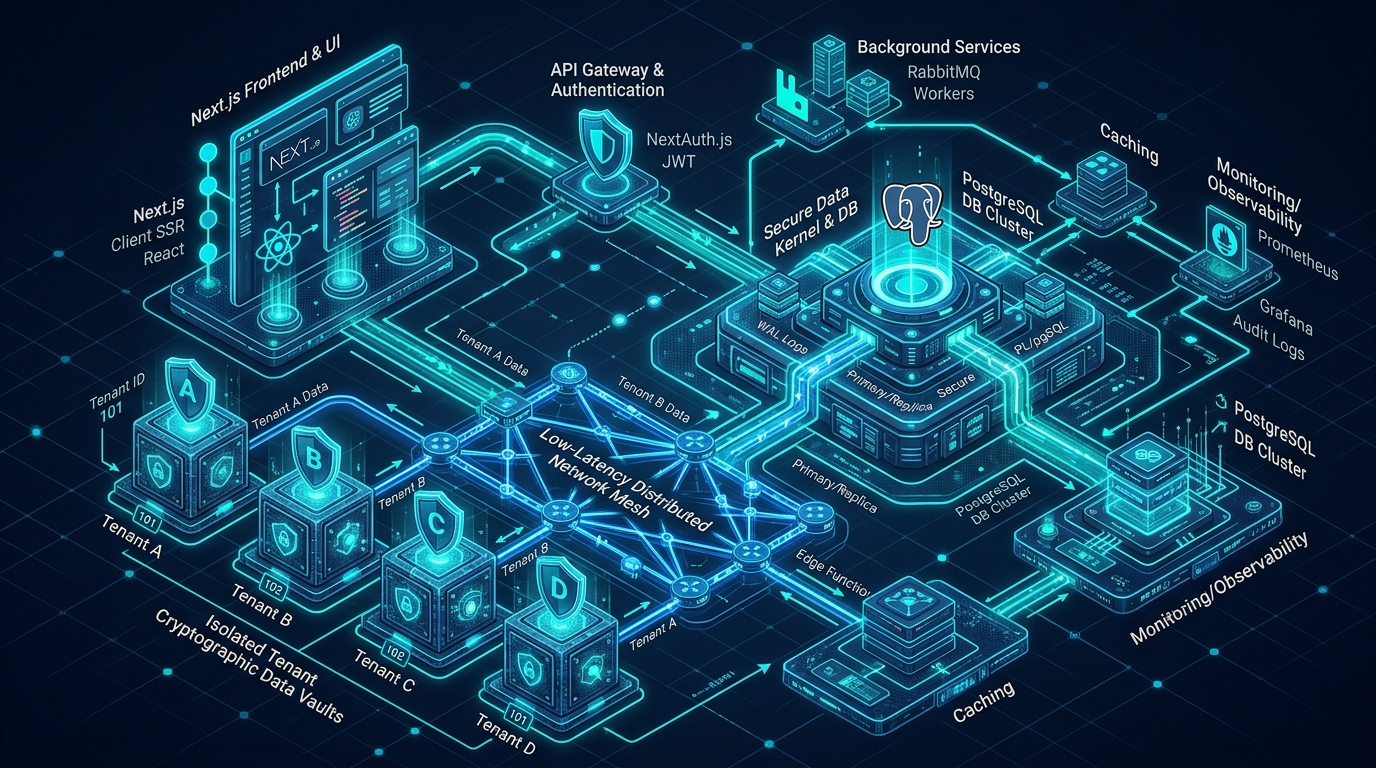
The Modern Multi-Tenant Challenge
When engineering B2B software, multi-tenancy is often approached with one of two extremes: 1. Database-per-tenant: Clean isolation, but introduces massive operational overhead, spiraling infrastructure costs, and deployment synchronization nightmares. 2. Application-level filtering: Simple to build initially (`WHERE tenant_id = x`), but one omitted query clause in a complex join leads to catastrophic cross-tenant data leakage.
At Onesign Concept Limited, our default architectural standard utilizes PostgreSQL Row-Level Security (RLS) paired with the Next.js 15 App Router. This guarantees that isolation is enforced at the database kernel level, regardless of how complex your GraphQL or REST API mutations become.
---
Enforcing Row-Level Security at the Kernel
Rather than trusting application developers to append tenant filters to every query, PostgreSQL RLS validates security policies dynamically per database transaction.
```sql -- Enable RLS on core tenant tables ALTER TABLE public.organizations ENABLE ROW LEVEL SECURITY; ALTER TABLE public.invoices ENABLE ROW LEVEL SECURITY;
-- Cryptographic claim inspection policy CREATE POLICY tenant_isolation_policy ON public.invoices AS RESTRICTIVE FOR ALL TO authenticated USING ( tenant_id = (current_setting('app.current_tenant_id', true))::uuid ) WITH CHECK ( tenant_id = (current_setting('app.current_tenant_id', true))::uuid ); ```
Whenever an API route handler in Next.js receives a request, the authenticated user session extracts the cryptographic JWT containing the tenant identity. Before running business queries, the tenant context is set within the database transaction:
```typescript await prisma.$executeRaw`SELECT set_config('app.current_tenant_id', ${userTenantId}, true);`; ```
Any subsequent query—including recursive nested relations—is physically incapable of reading or modifying rows outside the active tenant boundary.
---
Zero-Downtime Edge Caching with Next.js 15
Next.js 15 provides granular data cache tags. By scoping cache tags with tenant namespaces (e.g., `tenant:${id}:billing`), we can invalidate an individual company's cache instantaneously when an invoice is settled or a team member is invited, while leaving the rest of the global cache intact:
- Sub-30ms P95 global page loads via Edge CDN delivery.
- Instant cache revalidation through `revalidateTag()`.
- Zero cross-tenant cache contamination.
---
Key Takeaways for Technical Leadership
1. Security at Rest & In-Flight: Never rely purely on ORM filters for tenant separation. 2. Audit Trails: Maintain append-only audit tables for all administrative operations. 3. Transparent IP Ownership: Ensure your multi-tenant foundations are written without proprietary vendor lock-in, enabling seamless cloud portability.